
Young Dream Builders – Building Bright Minds, One Dream at a Time

We believe every child learns best through curiosity. Here they explore how shapes, balance, and imagination bring buildings, bridges, and cities to life. Through playful design challenges and hands-on creativity, they’ll discover that great structures aren’t just strong — they tell stories.
Empowering kids to create towers that touch the sky, bridges that connect, and cities full of wonder!
-
4-class plan (each 90 minutes) balances hands-on making, group games, and inspiration from visionary architects.
Super Shapes – Towers that Touch the Sky: Test how triangles, circles, and squares change strength by building marshmallow towers inspired by Shigeru Ban and Buckminster Fuller.
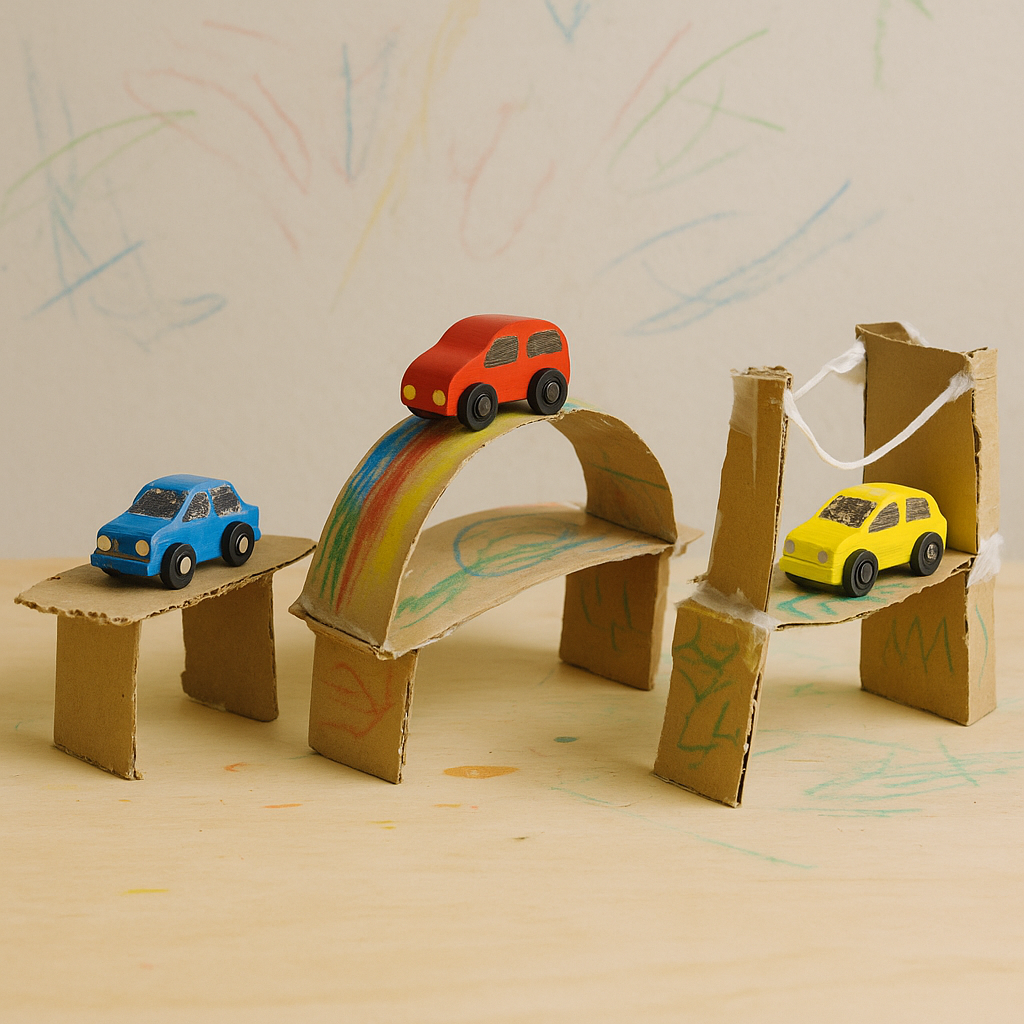
Bridge Builders – From Here to There: Create beam, arch, and suspension bridges to test with toy cars, exploring balance and tension with inspiration from Calatrava and Brunel.
Dream Houses – Homes of the Future: Design colourful, unusual houses from recyclables, imagining tomorrow’s living spaces inspired by Hundertwasser and Zaha Hadid.
Mini City Makers – Our World Together: Combine individual structures into one playful “Future City,” inspired by Kingelez and Norman Foster, while learning teamwork and systems thinking.
Each class blends building challenges with creativity, helping kids see architecture as both problem-solving and imagination at work.
-
Classes are led by a trained Fine Artist with over 15 years of teaching experience. Together, mum(s) and child(ren) are gently guided through techniques and explorations, making creative time at home easier and more enjoyable.
We understand that spending creative time with little ones can sometimes feel daunting — or, let’s be honest, even a bit boring. That’s where we come in. We provide the structure, inspiration, and encouragement. And if you fancy, sessions can also include relaxed conversation around a topic of your choice — a chance to socialise as much as to create.
-
Confidence in designing and testing structures
STEAM connections: geometry, engineering forces, and design thinking made playful.
Growth in teamwork, communication, and creative problem-solving.
Understanding architecture as both functional and artistic.
-
Architecture & design through play
Art meets STEAM — kids step into the shoes of architects and engineers, exploring how shapes, balance, and imagination create the buildings, bridges, and cities around us. Through playful experiments and big-picture thinking, they’ll discover that structures aren’t just about strength — they’re also about creativity, community, and dreaming up the future.
-
In our Architecture Lab, children don’t just build — they dream, test, and reimagine the world around them.
Each session combines art and engineering, giving kids a hands-on way to explore how structures stand, connect, and serve communities. They learn resilience through trial and error, collaboration through group city-making, and creativity by imagining futuristic homes and playful towers.Kids leave with bold structures, stronger problem-solving skills, and a sense of how design and engineering shape the spaces we live in — all while having fun.
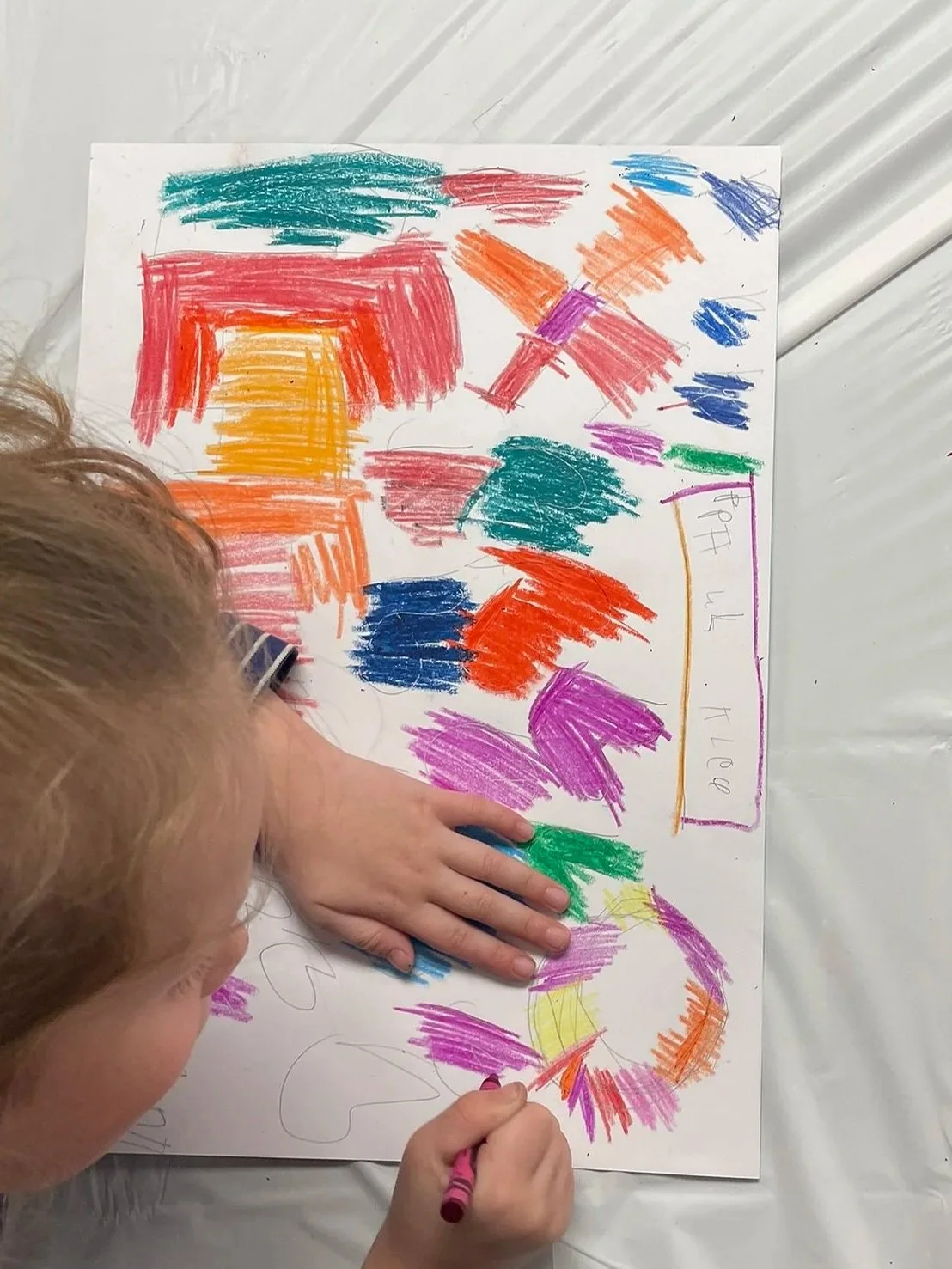
Art classes in pictures
-
![]()
Black & White – Contrast as Drama (7 years)
-
![]()
Monochrome – One Colour, Many Moods (6 years)
-
![]()
Discovering colour through Paul Klee–inspired art (6-8 years)
-
![]()
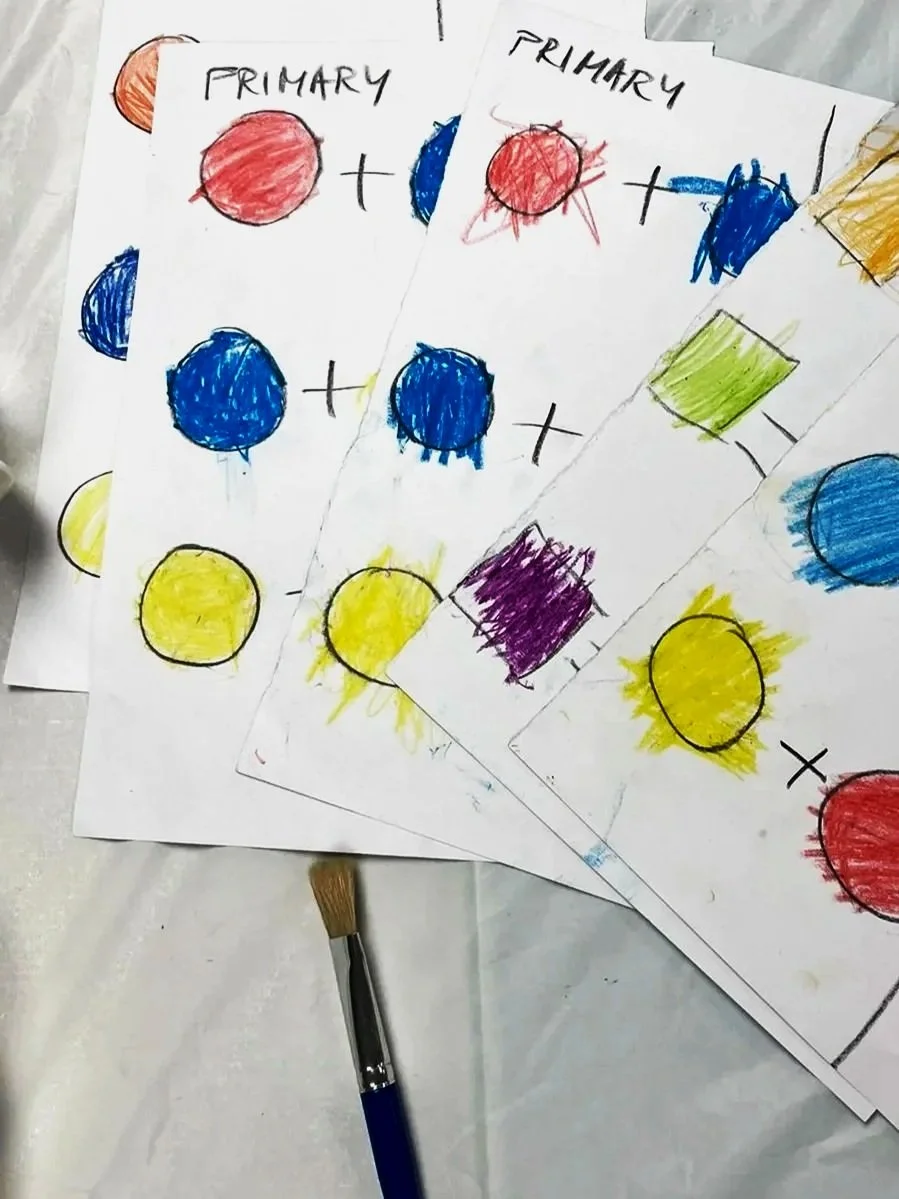
Primary Colours – The Superheroes (7 years)
-
![]()
Secondary Colours – Circle Dance (6 years)
-
![]()
Colour play and expression inspired by Paul Klee (7 years)
-
![]()
Colours and feelings. Discovering colours through the collage(6-8 years)
-
![]()
Colour theory excercise. (6-8 years)
-
![]()
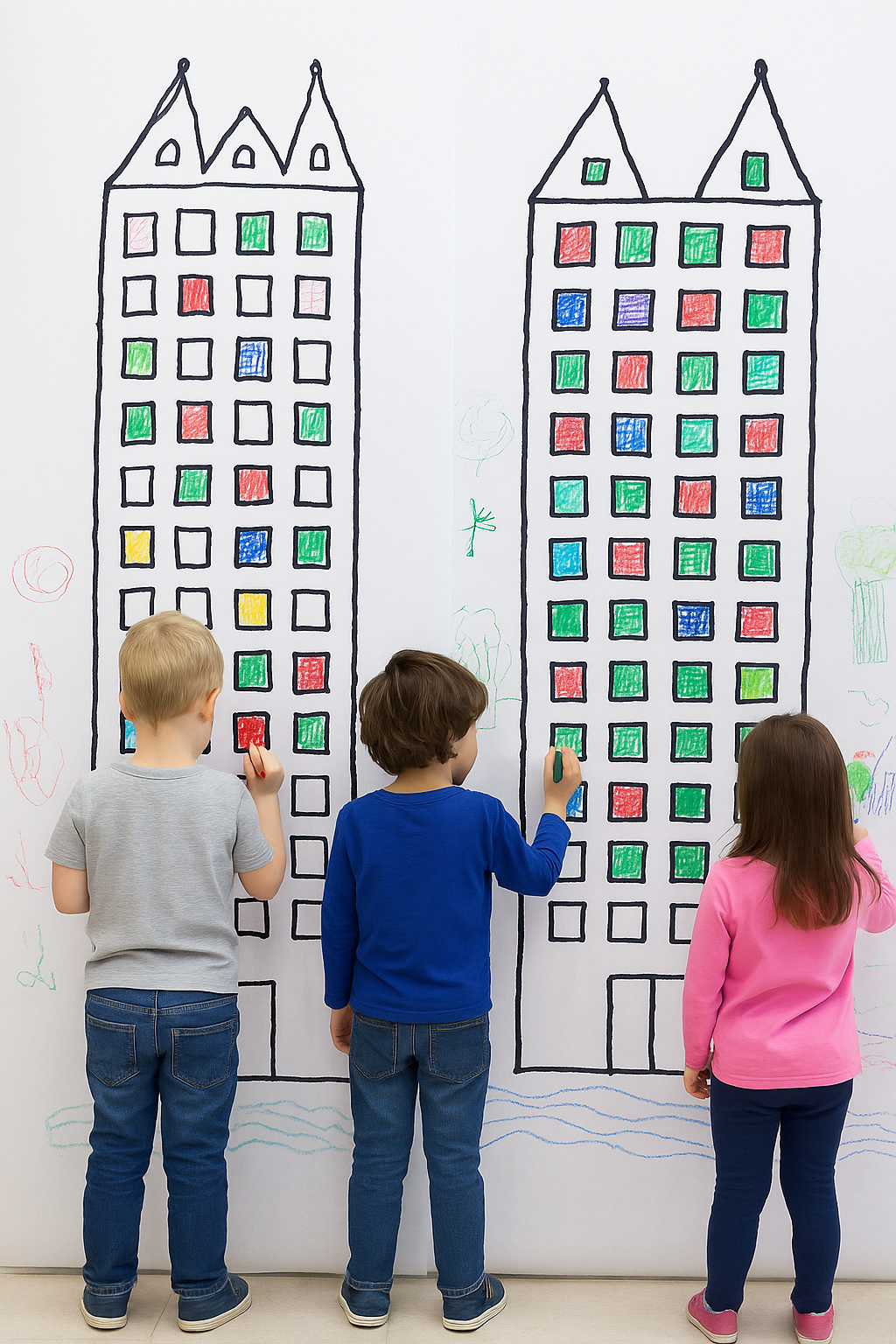
Towers that Touch the Sky (6 years)
-
![]()
Bridge Builders – From Here to There (7 years)
-
![]()
Exploration, shapes: triangle, square, circle bases. (6-8 years)
-
![]()
Mini City Makers (6-8 years)
-
![]()
A city is like a puzzle (6-7 years)




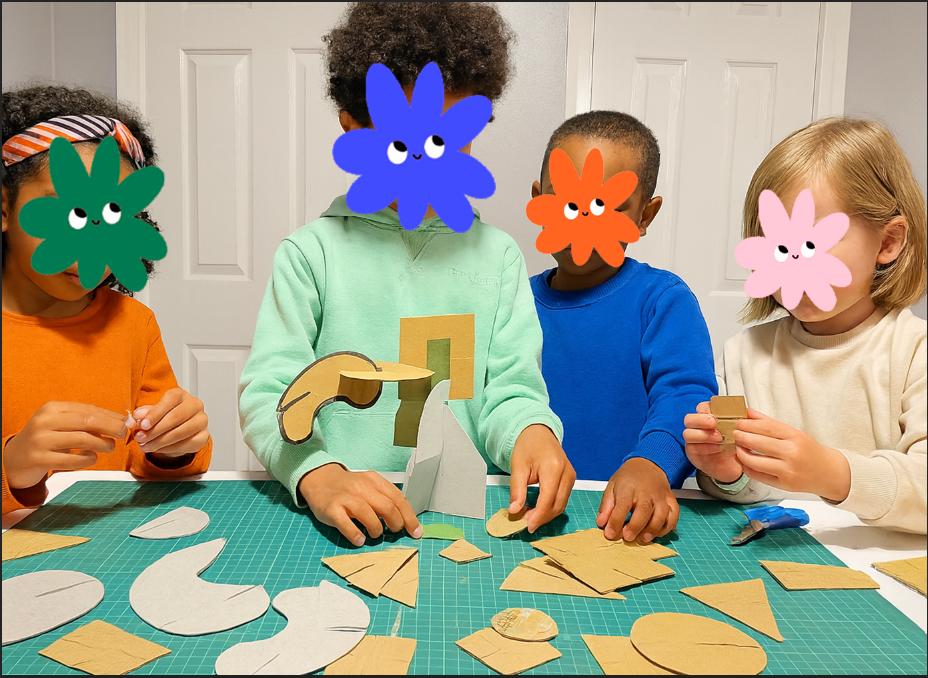
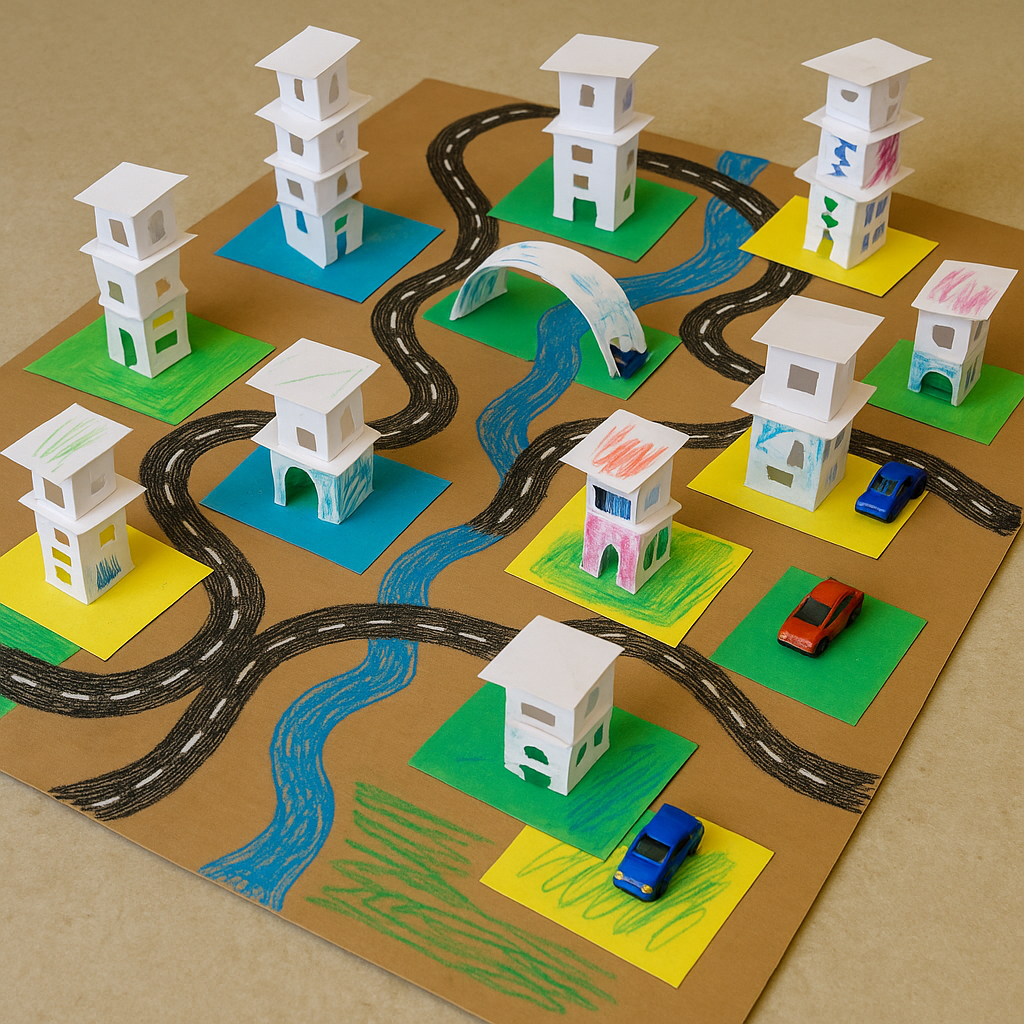
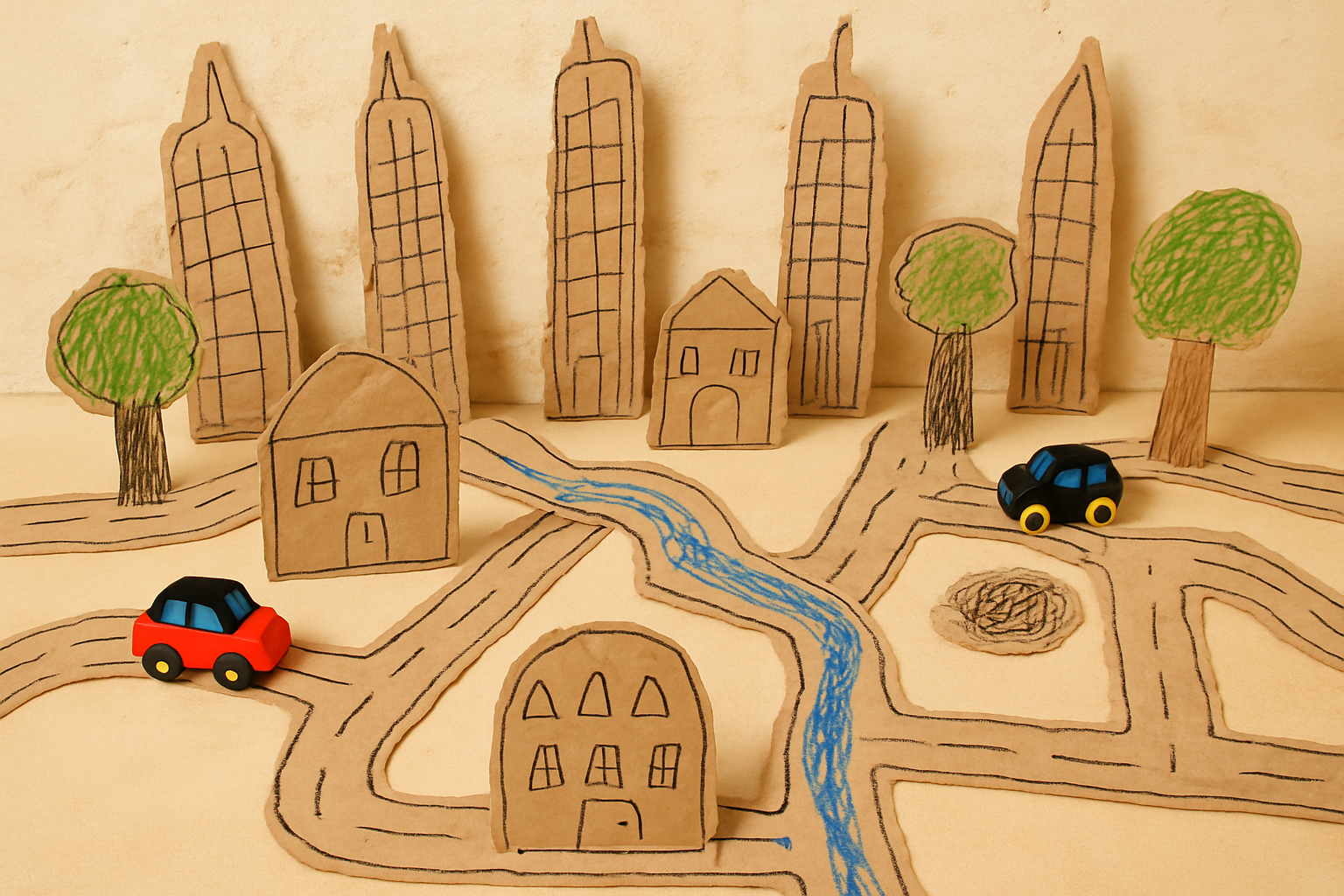
Foundation of 3D Modelling
Class 1: Super Shapes – Towers that Touch the Sky
Warm-up game:
Human Towers: In groups of 3–4, kids build towers with their bodies (standing, kneeling, leaning) and see how stable they can be.
Balance Challenge: Add “weight” by another child gently pressing on top — what happens?
Exploration:
Build towers from spaghetti + marshmallows or straws + tape.
Try different shapes: triangle, square, circle bases.
Test which can stand tallest or hold the most weight.
Concept:
“Shapes are like secret codes in architecture. Some are superheroes (triangles!) that make buildings strong.”
Artist Inspiration:
Shigeru Ban (paper tube architecture).
Buckminster Fuller (geodesic domes).
Outcome:
Kids discover how different shapes affect strength, learning engineering basics while playing.
Class 2: Bridge Builders – From Here to There
Warm-up game:
Human Bridges: Pairs make bridges with their bodies and see how long they can hold.
Add “weight” (another child crawls under/over) — which positions are stronger?
Exploration:
Make three types of bridges:
Beam bridge (flat strip).
Arch bridge (curved card).
Suspension bridge (paper + string).
Place toy cars or small weights on each to test strength.
Concept:
“Bridges are like handshakes between two places. Their secret is balance, tension, and clever shapes.”
Artist Inspiration:
Santiago Calatrava (futuristic bridges).
Isambard Kingdom Brunel (UK bridges).
Outcome:
Kids compare structures, learning why some bridges hold more weight and how design impacts function.
Class 3: Dream Houses – Homes of the Future
Warm-up game:
Silliest House Sketch: In 5 minutes, draw the most unusual house you can (with slides, rainbow roofs, or trees growing out the top).
Share ideas with the group.
Exploration:
Build mini dream houses from recyclables: boxes, tubes, cartons, fabric scraps.
Encourage playful designs — curved walls, crazy colours, “tree roofs.”
Join them together to form a “Future Street.”
Concept:
“Houses don’t all need straight lines — architects are dreamers who imagine how people might live tomorrow.”
Artist Inspiration:
Hundertwasser (colourful, playful houses).
Zaha Hadid (curvy futuristic forms).
Outcome:
Kids understand homes as spaces of creativity and emotion, not just function, imagining wild, future ways of living.
Class 4: Mini City Makers – Our World Together
Warm-up game:
City Brainstorm: Kids shout out everything a city needs (shops, parks, playgrounds, transport, schools).
Quick Sketch: Draw one silly invention your city could have (flying bus, candy park).
Exploration:
Each child makes one structure (cardboard, LEGO, recyclables).
Place them together on a large board/floor.
Add roads, rivers, parks, and transport connections.
Concept:
“A city is like a puzzle — each piece matters. When we connect them, we create a whole world.”
Artist Inspiration:
Bodys Isek Kingelez (fantastical model cities).
Norman Foster (futuristic London buildings).
Outcome:
Kids learn teamwork, systems thinking, and how creativity + engineering connect to make communities.